HOW TO COMBAT POVERTY: ACTION PLAN
Sometimes the poverty and suffering seems relentless, but through your generosity and support we have helped thousands of children and families around the world to make a real and lasting difference.
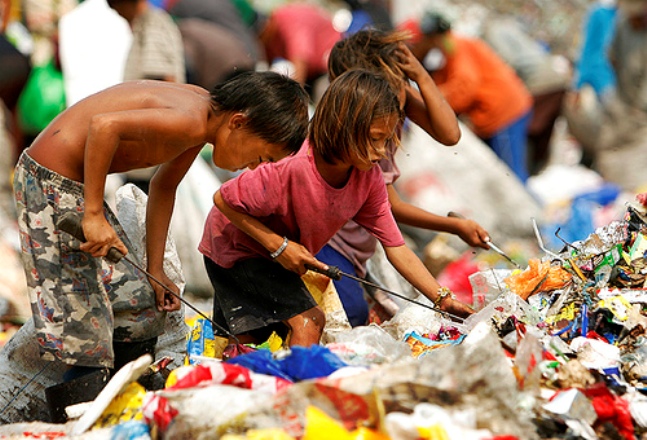
POVERTY IN THE PHILIPPINES: LACK OF VISION, YET NEW SOLUTIONS?
“We think sometimes that poverty is only being hungry, naked and homeless. The poverty of being unwanted, unloved and uncared for is the greatest poverty. We must start in our own homes to remedy this kind of poverty.” — Mother Teresa, Missionary and Saint.
After the World Summit on Social Development in Copenhagen in 1995, the U.N. recognized the need to reduce “overall” poverty, as 117 member-states adopted a declaration and program of action dedicated to this cause.
- Kindness can transform someone’s dark moment with a blaze of light. You’ll never know how much your caring matters.– Amy Leigh Mercree
We have been able to help many children who were found suffering and give them a future. We have wonderful stories of children we have helped to be adopted into homes around the world where at last they are getting the love and care they need to fulfil their potential and reach for their dreams.
We encourage you to get involved, to get your friends involved, to be a part of solving this chronic cycle of poverty and suffering. A simple donation makes a great difference, a meaningful difference – to the children, to their families and to the community.
Combating Poverty in the Philippines
- Greater Access to Education: A factor of systemic poverty is a lack of access to education in impoverished areas. People gain basic skills and increased job opportunities through education, which can help to combat poverty in the Philippines. Therefore, the Philippines signed the Universal Access to Quality Tertiary Education Act in 2017 to encourage more people to enroll in higher education and to address the issue of education inequality. The government subsidizes the cost of tuition for State Universities and Colleges (SUCs) students as well as other expenses such as school supplies. Private institutions also have access to a tuition subsidy. The Act aims to decrease the number of dropouts in higher education and promote the idea that higher education is available to all.
- Greater Access to Healthcare: In an effort to improve the healthcare system, President Duterte signed the Universal Healthcare Act in February 2019. The UHC Act provides access to the full spectrum of healthcare by enrolling citizens in the National Insurance Program and granting health coverage to all. While healthcare is not completely free, those in poverty will have more access to health services. To ensure the effectiveness of healthcare, the Act will form the Health Technology and Assessment Council (HTAC). The Council will consist of health experts who will assess health developments, such as technology, vaccines and other advancements. Additionally, the Philippines will allocate more funds to PhilHealth, which will improve the quality of service and lower the cost of medicine.
- Family Aid: To further efforts to support citizens, the government implemented the Pantawid Pamilyang Pilipino Program (4Ps) in 2007. The 4Ps is is a conditional cash transfer program for impoverished households. The program gives households grants so long as they meet certain requirements, including keeping the children in school, having regular health check-ups and having parents or guardians attend Family Development Sessions. The 4Ps program benefits about 20 million Filipinos, 9 million of whom are children. Therefore, the program reaches about 20% of the population with the goal of greater poverty reduction.
- Economic Improvement: With the goal of reducing poverty by strengthening economics, President Duterte signed the Rice Tariffication Law in February 2019, amending the Agricultural Tariffication Act of 1996. The Law places a 35% tariff on imported rice with the goal of prioritizing local rice production for the population by stabilizing the supply. The tariff also aims to benefit local farmers by creating a more efficient and competitive agricultural system.
- Build, Build, Build: Additionally, the Duterte administration created the “Build, Build, Build” infrastructure plan in 2017. The initial goal of the program was to complete 75 projects, but Duterte revised the plan to instead target finishing 100 projects. Some projects include new public transportation and airport renovations. The government has put about 34% of the projects into action and is expecting to complete 56% by 2022. By 2019, the government had completed two of the initial 75 projects. With support from loans, the Philippines will rely on Build, Build, Build as a strategy to aid the country in recovering from the COVID-19 pandemic. The government’s hope is that combatting the effects of the pandemic by improving the country’s infrastructure will stimulate the economy and create more jobs. However, the program has received criticism due to its slow execution as a result of underspending.
Unfortunately, poverty is expected to increase in the Philippines because of the coronavirus crisis. This will lead to a decrease in consumption growth and further income losses. Therefore, greater efforts are necessary to combat poverty in the Philippines amid the pandemic, which has hit the impoverished the hardest.
– Zoë Nichols
CHALLENGES AHEAD
New anti-poverty program
Concerning the Poverties Project
This article was originally part of the ‘Poverties project,’ which I ran from 2011 to 2016. Its goal was to make social and economic research on poverty more accessible to the general public. It made an effort to present evidence-based causes and solutions as much as possible, albeit with a dash of sarcasm or dark humor at times. Hopefully, it makes the description of some (horrible) situations more bearable.
Since 2010, reducing poverty in the Philippines has been an official objective of the government led by Benigno Aquino and less so by the newest government but it remains a priority. The country seems to be struggling however to maintain the healthy growth of 2010 (above 7%), which remains important to keep the country on the right path.

HOW TO COMBAT POVERTY: ACTION PLAN
THIS REALITY THAT BREAKS OUR HEARTS
Poverty in the Philippines
A statement on the Philippines by the World Bank in August 2014 noted the country’s recent strong economic growth. Yet in spite of this positive economic performance, extreme poverty remains a huge problem.
The same report acknowledged that nearly 25 million Filipinos still live below the poverty line and it is children’s health and wellbeing that is most greatly affected. While there have been gains, there are still many challenges to combating child poverty.
Millions of children in the Philippines are deprived of amenities as basic as sanitary toilet facilities and safe water and are without electricity in their homes. Three out of 4 income-poor children are living in rural areas but the growth of poor children in urban centres is increasing.
The Philippines struggles with high population growth and high levels of inequality, affecting the welfare of millions. The country remains trapped in a debt cycle where international loan repayments limit the ability of the government to make investments in its own human and physical capital. Critical public services such as health and education are severely underfunded. Higher food and energy prices, particularly the cost of rice, also hurt the poor disproportionately.
Source: Report of the Secretary-General, Special edition: progress towards the Sustainable Development Goals
Comments:
REFERENCES
- Header image courtesy of Simon Oosterman
- Scaling-Up Community-Driven Development. Evidence from the Philippines, Piero Conforti and Ugo Pica-Ciamarra, Piero Confortia and Ugo Pica-Ciamarra 2007
- Correlates of Poverty: Evidence from the Community-Based Monitoring System (CBMS) Data, Rechel G. Arcilla et al., Business & Economics Review 2011
- Voices from the Top of the Pile: Elite Perceptions of Poverty and the Poor in the Philippines, G Clarke & M. Sison, Development and Change 2003
- ‘Free Market’, Export-Led Development Strategy and its Impact on Rural Livelihoods, Poverty and Inequality: The Philippine Experience Seen from a Southeast Asian Perspective, Saturnino M. Borras Jr., Review of International Political Economy 2007
- Toward Measuring Household Vulnerability to Income Poverty in the Philippines, J. S. Albert et al., Philippine Journal of Development 2008
- Analysis of the Impact of Changes in the Prices of Rice and Fuel on Poverty in the Philippines, Celia M. Reyes et al., DLSU Business & Economics Review 2010
- New Dawn — or False Dawn?, Business Asia, The Economist Dec. 2010
- Anti-Poverty or Anti-Poor? The World Bank’s Market-Led Agrarian Reform Experiment in the Philippines, S. Borras et al., Third World Quarterly 2007
- Poverty and Income Dynamics in Philippine Villages, 1985–2004, Jonna P. Estudillo, Yasuyuki Sawada, and Keijiro Otsuka, Review of Development Economics 2008
- Poverty Effects of the Philippines’ Tariff Reduction Program: Insights from a Computable General Equilibrium Analysis, John Cockburn et al., Cororaton, Asian Economic Journal 2008
- Tariff Reductions, Carbon Emissions, and Poverty, Erwin L. Corong, ASEAN Economic Bulletin 2008
- Building Institutional Capacity for the Upgrading of Barangay Commonwealth in Metro Manila, L. Antolihao & B. van Horen, Housing Studies 2005
- WTO, Trade Liberalization, and Rural Poverty in the Philippines: Is Rice Special?, Caesar B. Cororaton and John Cockburn, Review of Agricultural Economics 2006
CONTACT US THROUGH
Email Address: mikaelamacale@dissuadedmotives
Contact Number: 09654735643
LET’S WORK TOGETHER!
 seven E blog